Home Rough Bargains Equipment Books Online Designs Just Ask Jeff Order News List Contact Me Links
Amethyst Aquamarine Beryl Citrine Emerald Garnet Opal Peridot Sapphire Scapolite Spinel Sunstone Topaz Tourmaline Quartz Zircon
Beginner's Page New Stuff Odds & Ends Specials Parcels Synthetics
Cut Gemstones Cutting Information Gemstone Pricing Guides How to buy Gemstones

Oragami Star

Rubellite (Tourmaline)
Date - Pricing as of April 2008

Color: Pink, purple, purple/red, red/red

Note: Most grading systems put pink Tourmaline under the heading of Rubellite. Pink Tourmaline is pink, not Rubellite in my opinion. So I am going to list them on the same page but note that Rubellite is basically 40% saturation and higher for the sake of pricing depending on the tone.

Note2: Some grading systems grade red/red colored Rubellite as the top desirable color. This is complete garbage. The vast majority of red/red Rubellite is heated and then irradiated to make the color and is basically a man-made color. Go to any major gemstone trade show and you will see cases and cases of identical color... It is all cooked and irradiated.

Red/red virtually never occurs naturally, at least that I have ever seen in my many years of experience. I would never say never, but I will say I have never really seen it or seldom seen it. There is virtually always a pink/purple to peach component in any natural Rubellite.

So what is the red/red grading all about? Well lets say that there are some major interests that heat and irradiate Tourmaline and want to sell their treated goods... and the grading and trade labs and associations are not independent in my opinion. You do the math.

So I obviously will not and do not grade irradiated red/red material above a natural purple/red/pink stone. As a matter of fact if the stone is heated and irradiated I would list it under "treated" stones and I would not list it here at all. Nor would I ever cut it.

Note3: In both pink and Rubellite as the stones become larger, say over 2 or 3 carats, there is a significant value increase per carat for the stones.

Note4: In peach, if the color is bright and pretty (what I would call a pure color) I price it identically to the pink. If it is nice but not a vivid color then I tend to price peach a little lower than pink in general.

Here is how I describe the intermediate colors of pink/Rubellite Tourmaline... When you first look at a stone what is your first reaction? Pink? Bubble gum pink? Hot pink/purple? Generally your first reaction is the correct one.

Peach - Light to dark peach
Peach/pink -
More peach than pink, 60% peach or more.
Pink/peach -
More pink than peach, 60% pink or more.
Pink -
Light to dark pink.
Bubble gum to hot pink - Light bubble gum to almost hot pink.
Hot pink/Rubellite - Hot pink with some purple bordering on Rubellite.
Rubellite - Pink/purple/red.

Some times you will have a stone that you just cannot decide on and in a case like that I tend to decide towards the lower side, because I would rather under describe a stone than over describe one. People will decide what they like and want when they view the cut stone.

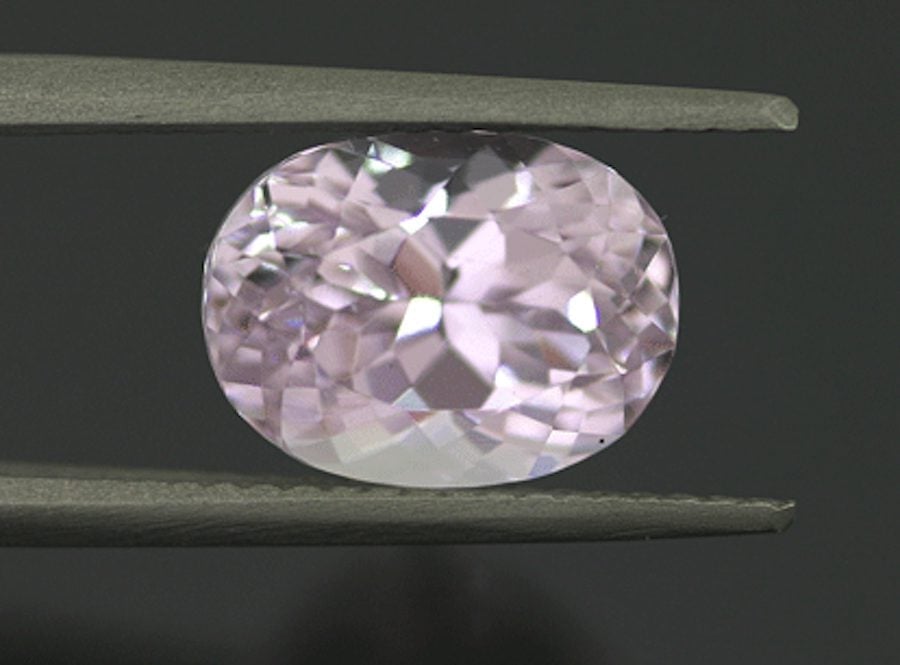
Pale (almost colorless to 15% tone) - Pale to light pink to peach.
Comments - This material is actually one of the most valuable to me, especially in large pieces when cut into a large interesting design that takes advantage of the color. I like light saturation.
Pricing - I generally price this material $90/ct to $240/ct and a minimum of $150 for a small stone to cover the labor.

Light (15% tone to 30%) - Pale to light pink to peach.
Comments - This material is one of the most valuable and I sell it faceted quite well, especially in large pieces when cut into a large interesting design that takes advantage of the color.
Pricing - I generally price this material $180/ct to $360/ct and a minimum of $150 for a small stone to cover the labor.

Light/Medium (30% tone to 45%) - Light pink to peach. Border line hot/pink Rubellite.
Comments - This material is valuable and to me probably the best range. I cut this material in what ever the best design and yield are.
Pricing - I generally price this material $240/ct to $650/ct and a minimum of $150 for a small stone to cover the labor.

Medium (45% tone to 65%) - Medium pink to peach. Hot pink/Rubellite.
Comments - This material is the top quality, I cut it for shape and yield.
Pricing - I generally price this material $300/ct to $1250/ct and a minimum of $150 for a small stone to cover the labor.

Medium/Dark (65% tone to 85%) - Medium/dark Rubellite.
Comments - This material is the top Rubellite. I cut this material in the smaller to medium size ranges and typically use unique designs
Pricing - I generally price this material $350/ct to $1800/ct and a minimum of $150 for a small stone to cover the labor.

Dark
(85% tone to 100%) - This material is around, usually very dark. I seldom cut any thing this dark.
Comments - Depending on the mine location this material can be heated to lighten it, but in some cases heat often damages the material.
Pricing - Pricing this material is determined after heating depending on the category above the material fits into.

Special - As we all know as cutters some times a stone just comes out "special" for what ever reason. On these kinds of stones I basically price how ever I feel like. Because this stone comes under the "special" category I often do not care if I sell the stone or not. So I usually price it high enough that if I do sell it, I get a very good price. Enough to make me say "Oh well..." and sell it. So be aware that some times I just price a stone high because I do not care if I sell it. Ironically these stones usually sell the fastest...

Return to Pricing Information Index

E-mail to inquire or order: jeff@faceters.com

Amethyst Aquamarine Beryl Citrine Emerald Garnet Opal Peridot Sapphire Scapolite Spinel Sunstone Topaz Tourmaline Quartz Zircon
Home Rough Bargains Equipment Books Online Designs Just Ask Jeff Order News List Contact Me Links


Copyright 1998-2008 Gram Faceting - All Rights Reserved.