| Home | Rough | Bargains | Equipment | Books | Online Designs | Just Ask Jeff | Order | News List | Contact Me | Links |
| Amethyst | Aquamarine | Beryl | Citrine | Emerald | Garnet | Opal | Peridot | Sapphire | Scapolite | Spinel | Sunstone | Topaz | Tourmaline | Quartz | Zircon |
| Beginner's Page | New Stuff | Odds & Ends | Specials | Parcels | Synthetics |
| Cut Gemstones | Cutting Information | Gemstone Pricing Guides | How to buy Gemstones |
![]()
Indicolite (Tourmaline)
Date - Pricing as of April 2008Color: Blue/blue, blue/green. Copper bearing material Paribia is in a special category.
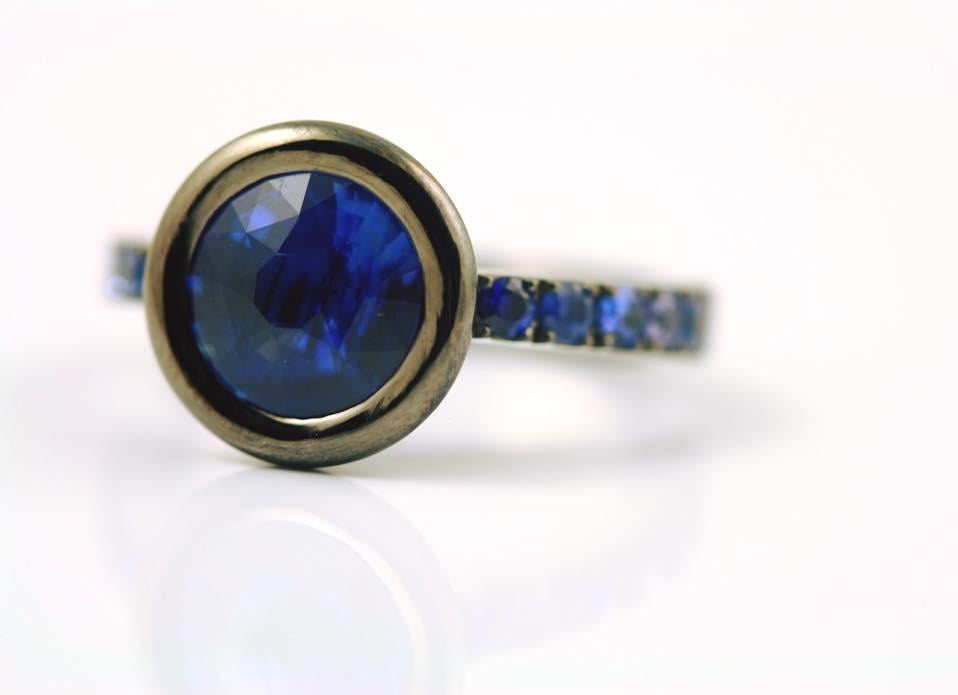
Note: Indicolite Tourmaline is very seldom just blue/blue. Usually there is another color in the material, most common is green. In most cases the more pure blue the Tourmaline is the more value. However, there are some exceptions, like a top blue/green (pictured) which I would consider to be about as valuable as a solid blue stone, depending on the blue.Note2: Indicolite tends to be more valuable as the color range goes towards Turquoise (copper bearing in special cases) and mint, and less valuable as the color becomes very dark navy blue and saturated.
Of special note is the Pariaba or African copper bearing material. Pricing on copper bearing Tourmaline is a market phenomenon and can vary substantially and is not included in the pricing I have listed.
As of Feb 2008 top blue stones were selling for $1800/ct to about $10,000/ct depending on quality color and size. All copper bearing stones are special cases and the market varies dramtically, there is no real way to price this kind of stone. The best thing to do is just check around in the market and see what comparable stones are selling for...
Note3: In blue Tourmaline as the stones become larger, say over 2 or 3 carats, there is a significant value increase per carat for the stones.
Here is how I describe the intermediate colors of blue Tourmaline... When you first look at a stone what is your first reaction? Blue? Green? Generally your first reaction is the correct one.
Blue/green - More blue than green, 60% blue or more.
Green/blue - More green than blue, 60% green or more.Some times you will have a stone that you just cannot decide on and in a case like that I tend to decide towards the green side, because I would rather under describe a stone than over describe one. People will decide what they like and want when they view the cut stone.
Pale (almost colorless to 15% tone) - Pale to light blue to blue/green.
Comments - This material is actually one of the most valuable to me, especially in large pieces when cut into a large interesting design that takes advantage of the color.
Pricing - I generally price this material $140/ct to $265/ct and a minimum of $150 for a small stone to cover the labor.
Light (15% tone to 30%) - Light blue to blue/green.
Comments - This material is one of the most valuable and I sell it faceted quite well, especially in large pieces when cut into a large interesting design that takes advantage of the color.
Pricing - I generally price this material $265/ct to $850/ct and a minimum of $150 for a small stone to cover the labor.
Light/Medium (30% tone to 45%) - Light/medium blue to blue/green.
Comments - This material is valuable and not easy to acquire. I cut this material in what ever the best design and yield are.
Pricing - I generally price this material $450/ct to $1200/ct and a minimum of $150 for a small stone to cover the labor.Medium (45% tone to 65%) - Medium blue to blue/green.
Comments - This material is the top quality, I cut it for shape and yield.
Pricing - I generally price this material $600/ct to $2400/ct and a minimum of $150 for a small stone to cover the labor.Medium/Dark (65% tone to 85%) - Medium/dark blue to blue/green.
Comments - This material can be nice if the light color (a/b axis) is cut and the darker color (usually "c" axis) is minimized. I cut this material in the smaller to medium size ranges and typically use unique designs
Pricing - I generally price this material $90/ct to $350/ct and a minimum of $150 for a small stone to cover the labor.
Dark (85% tone to 100%) - This material is around, usually very dark. I seldom cut any thing this dark.
Comments - The best use for this material is small (melee) stones so that the color will show. I almost never cut this material. On rare occasions this material can be heated to lighten it, but in most cases if it will heat, it already has been heated and heat often damages the material.
Pricing - Pricing this material is cost of goods and labor.Special - As we all know as cutters some times a stone just comes out "special" for what ever reason. On these kinds of stones I basically price how ever I feel like. Because this stone comes under the "special" category I often do not care if I sell the stone or not. So I usually price it high enough that if I do sell it, I get a very good price. Enough to make me say "Oh well..." and sell it. So be aware that some times I just price a stone high because I do not care if I sell it. Ironically these stones usually sell the fastest...
Return to Pricing Information Index
E-mail to inquire or order: jeff@faceters.com
| Amethyst | Aquamarine | Beryl | Citrine | Emerald | Garnet | Opal | Peridot | Sapphire | Scapolite | Spinel | Sunstone | Topaz | Tourmaline | Quartz | Zircon |
| Home | Rough | Bargains | Equipment | Books | Online Designs | Just Ask Jeff | Order | News List | Contact Me | Links |